

Now that you have nailed the foundational aspects of setting up your NAP consistency, picking categories, and responding to reviews, it is time to move into deep-dive execution. Simply setting up a profile isn’t enough anymore. If you want to outperform your competitors and capture high-intent local leads, you must commit to continuously optimising Google Business Profile configurations to alignment with Google’s shifting local search algorithm.
At Brisbane Local SEO Agency, we have analyzed how local maps algorithms interact with local consumer behavior. This guide serves as the comprehensive tactical extension to our foundational setup guide. Below, we break down the hyper-specific, advanced optimizations required to scale your visibility across the entire South East Queensland region.
1. Advanced Geotagging and Image Asset Deployment
Visual content is a massive driver of engagement, but it also carries massive local data signals. When you go about optimising Google Business Profile photo assets, you need to think beyond what looks pretty to a human user. You need to provide Google’s machine-learning vision AI with explicit contextual data.
Mobile Uploads and True Metadata
While Google officially strips explicit EXIF data (like GPS coordinates) when images are uploaded to a dashboard, it still retains user-behavior footprint data. When your team uploads images directly via a mobile device with location services turned on while physically standing at a job site in Chermside or Carindale, Google registers that device’s footprint.
This footprint reinforces your business’s active presence in those specific geolocations.
Visual Content Categories for Local Signals
To ensure you are properly optimising Google Business Profile media sections, aim for a structured portfolio layout:
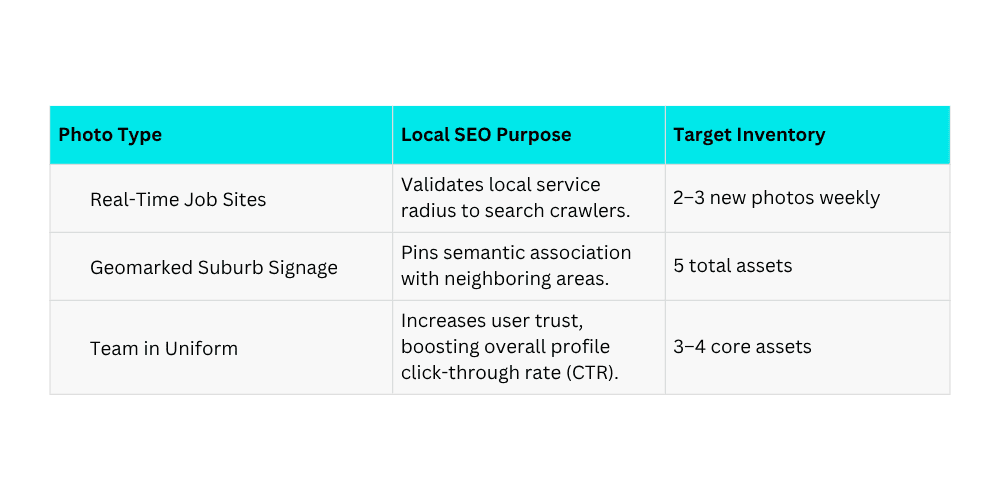
Make sure your back-end imagery assets utilize accurate naming conventions. Every single image alt attribute on your core website mirror pages should explicitly follow descriptive guidelines, ensuring search algorithms connect your site content with the profile.
2. Dynamic Local Justifications and Review Architecture
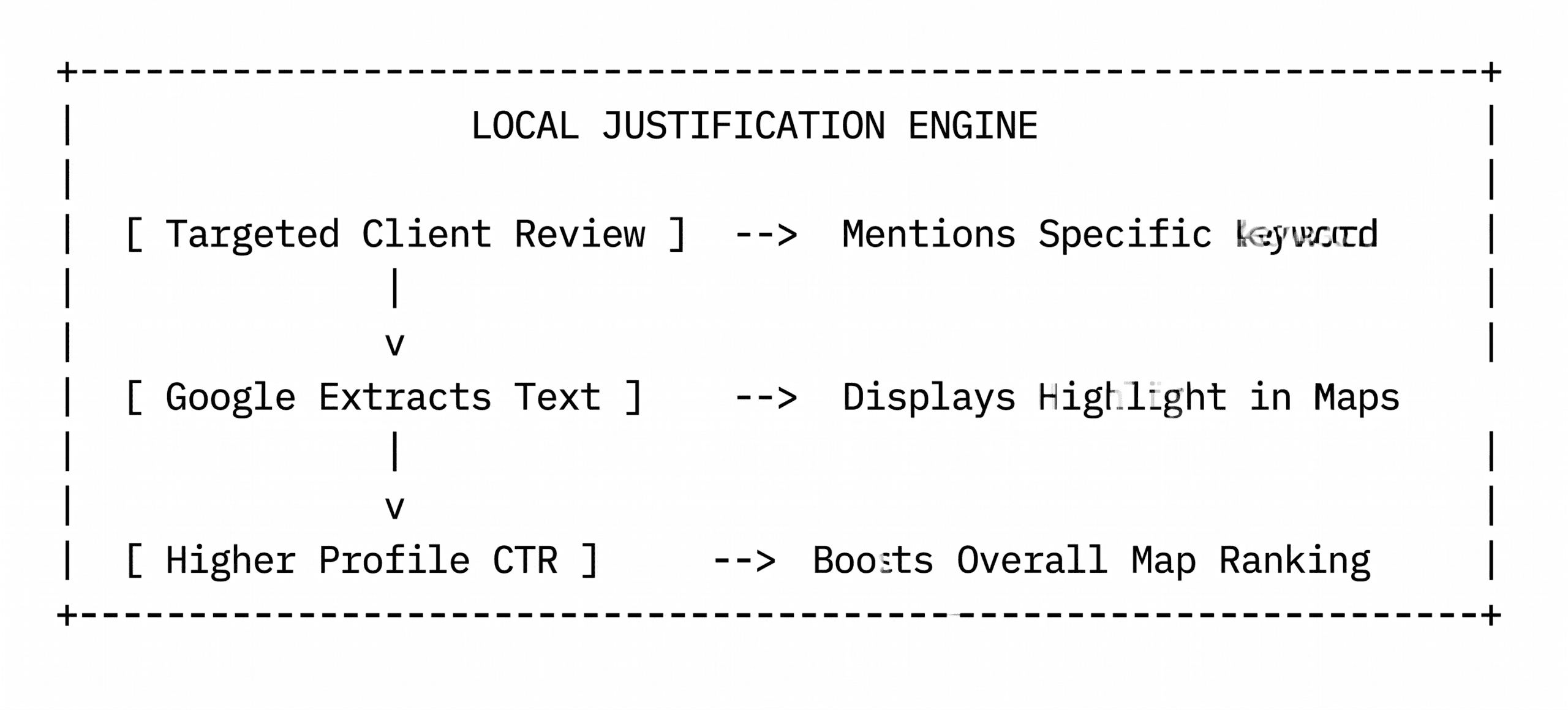
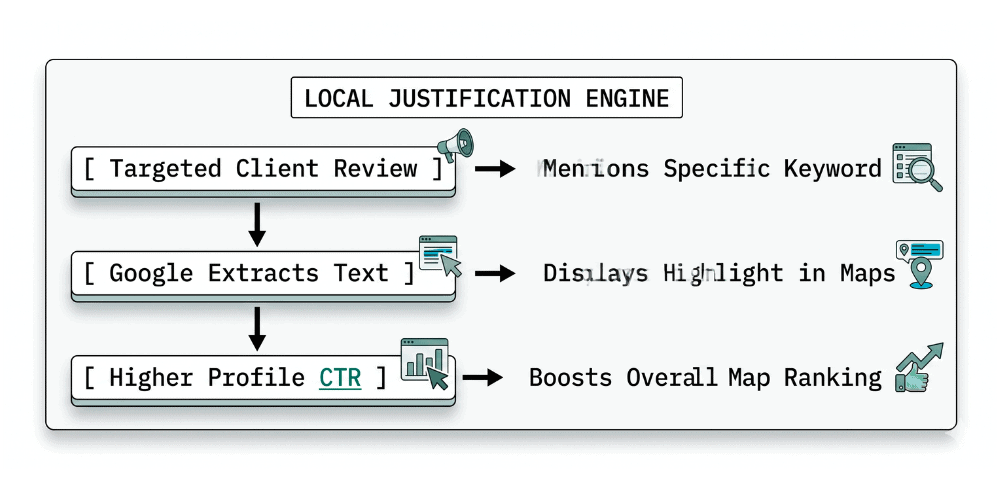
The map results pack often displays snippet highlights beneath a listing, such as “Provides: Local SEO services”. These are called local justifications. Securing these snippets is entirely dependent on optimising Google Business Profile review acquisition processes.
Prompting Clients for Conversational Keywords
Do not just ask your customers for a generic “good feedback” review. Guide their language. When you send your follow-up email or SMS review link, provide brief conversational prompts.
“If you loved our service, please mention the specific suburb we visited and the exact service we provided for you!”
When a customer writes: “The team did an incredible job with our local SEO marketing in Fortitude Valley,” Google parses that review text. The next time a prospect searches for that service in Fortitude Valley, your profile is fast-tracked to the top with a bold justification text snippet. This specific review architecture is a crucial cornerstone when systematically optimising Google Business Profile rankings.
3. Optimising Google Business Profile Local Posts for Conversion
Google Posts act like micro-blogging platforms that live directly inside your search engine knowledge panel.
The Anatomy of a High-Rank Local Post
To keep your momentum moving forward while optimising Google Business Profile updates, ensure every post contains three core components:
- Local Anchor Text: Explicitly name a Brisbane landmark or neighborhood within the text body.
- Value-Focused Content Hook: Address a direct pain point or offer a tangible local discount.
- UTM-Tracked Call to Action: Always use a “Learn More” or “Call Now” button embedded with a custom tracking URL. This allows you to measure exactly how many conversions are generated directly from your Maps listing in Google Analytics.
4. Setting Up Proactive Q&A Modules
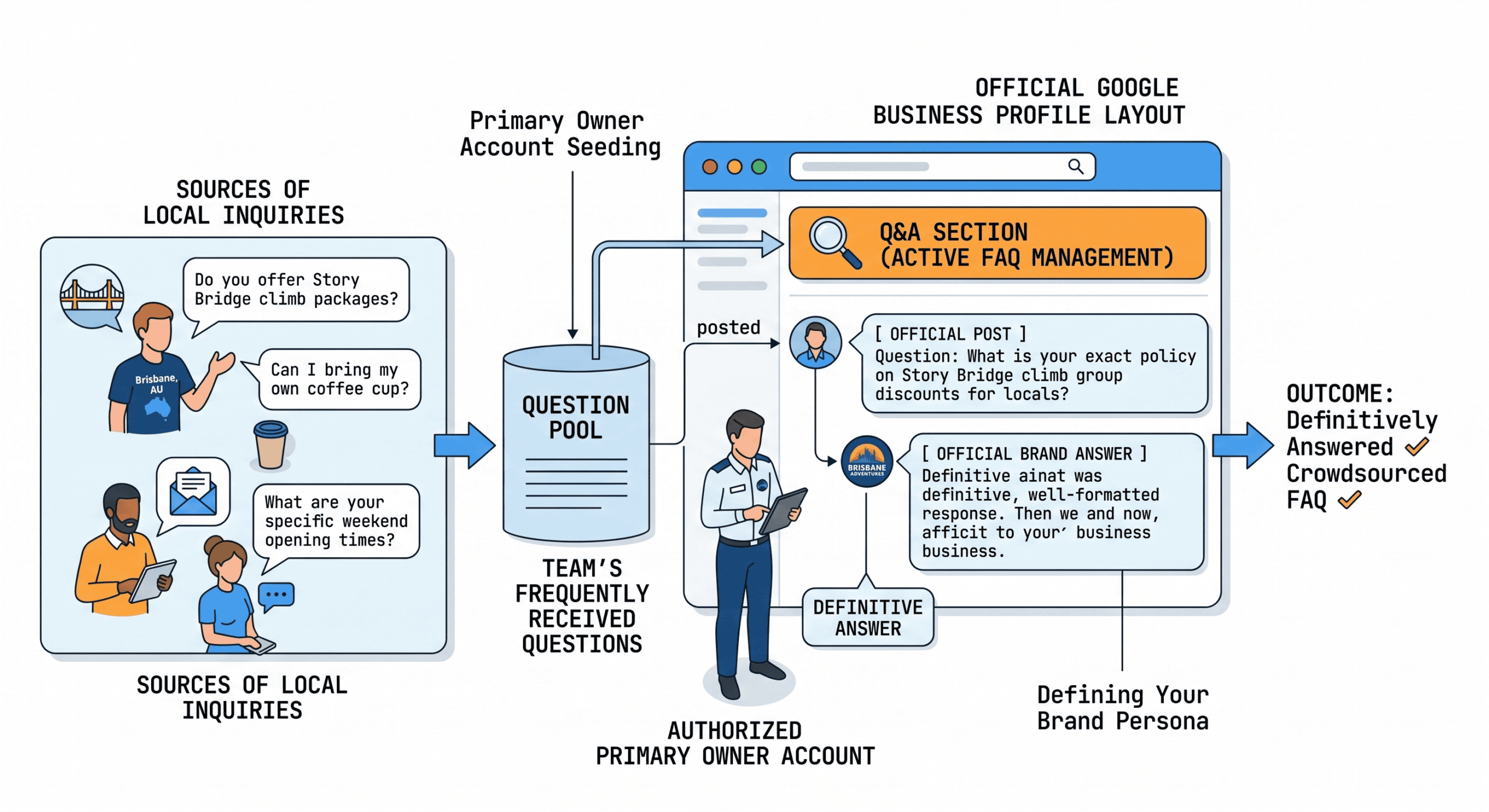
The Questions & Answers section of your profile is a public forum. Any internet user can ask a question, and crucially, any internet user can provide an answer. Leaving this section unmonitored opens your brand up to community misinformation or outdated pricing details.
When you take charge of optimising Google Business Profile layouts, you should treat the Q&A section as a crowd-sourced FAQ page. You are completely permitted to log into your primary owner account, post the exact questions your team receives most frequently from Brisbane locals, and answer them definitively from the official brand persona.
Pre-Seeding Your Q&A Matrix
Consider uploading the following programmatic questions directly to your dashboard:
“Do you service both the Northside and Southside of Brisbane?”
“What are your standard emergency response turnaround times in the CBD?”
“How long do local strategic consultations typically take?”
By answering these questions yourself, you provide instantaneous, keyword-rich value directly on the search results interface. This control over your public narrative is a key differentiator of profiles that successfully execute the art of optimising Google Business Profile parameters.
5. Architectural Alignment: Mapping Your Website to Your Profile
Your off-site map asset does not exist in a vacuum. It is deeply connected to your digital home base—your website. If your website lacks local authority or contains broken technical link structures, your map listing will struggle to break out of its immediate neighborhood radius.
To ensure your digital assets are perfectly aligned, embed a responsive, highly accurate Google Maps iframe directly onto your main contact landing page. This creates a hard-coded link loop between your website’s domain authority and your mapping infrastructure, which significantly assists in optimising Google Business Profile prominence across broader search radiuses.
6. Advanced Local Inventory and Product Carousels
Even if your business operates strictly within a service-based framework, you should utilize the Products and Services dashboard modules. The Product Carousel takes up highly valuable visual real estate on mobile devices.
When building out your product tabs while optimising Google Business Profile directories, create individual, clean graphics for each core service offering. Give every listing a robust, unique description detailing exactly what the service entails, who it is for, and how a Brisbane resident can book it. This populates your profile with an immense layer of semantic local keywords, signaling to Google that you have an authoritative solution for every relevant search query.
7. Operational Tracking and Competitive Auditing
The local search ecosystem is incredibly fluid. A strategy that secures the #1 slot today can be challenged tomorrow by an aggressive competitor or a sudden core algorithm shift.
To stay ahead, establish a routine around optimising Google Business Profile parameters. Every month, run an incognito local search from different coordinates across Brisbane to track your true geographic reach. Audit the top-performing competitors in the area: look at their review velocity, check how frequently they publish posts, and see if they have adapted their primary categories.
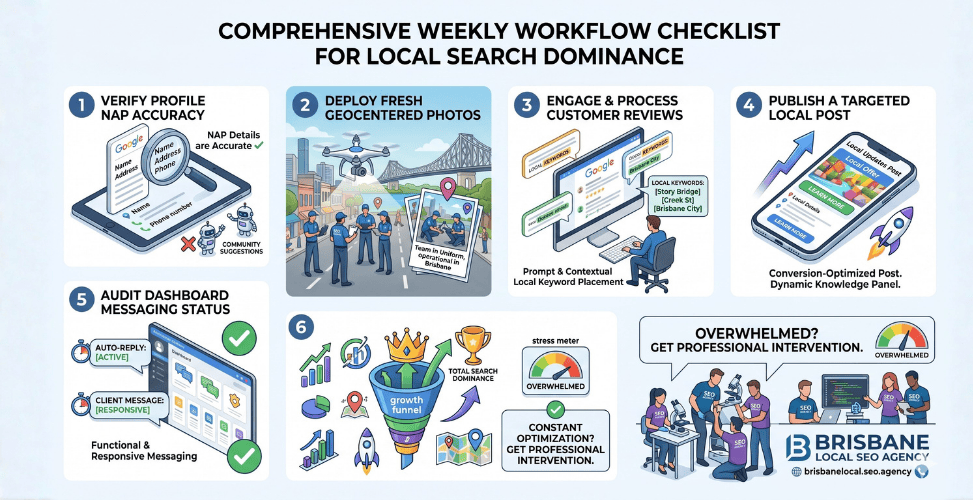
A Comprehensive Weekly Workflow Checklist
To ensure your business maintains a dominant hold over the local search space, follow this structured weekly management routine:
Verify Profile NAP Accuracy: Ensure your structural details haven’t been altered by automated community suggestions.
Deploy Fresh Geocentered Photos: Upload fresh real-world assets of your team operational within the city.
Engage and Process Customer Reviews: Respond promptly to all customer reviews with contextual local keyword placement.
Publish a Targeted Local Updates Post: Keep your knowledge panel dynamic with a conversion-optimized post.
Audit Dashboard Messaging Status: Ensure your automated client messaging features are responsive and functional.
If managing this constant optimization schedule becomes overwhelming while running your daily business operations, professional intervention can streamline your growth. Our specialized team at Brisbane Local SEO Agency can step in to handle the heavy lifting. We know exactly what elements Google looks for when ranking local businesses, and we can help transition your digital presence to the absolute top of the search results.
Frequently Asked Questions
1. How does regularly optimising Google Business Profile listings improve organic search footprint?
When search algorithms observe that a maps profile receives high engagement, fresh image assets, and consistent review text, it upgrades the business’s overall prominence score. This localized trust authority spills over, positively impacting your main website’s organic keyword rankings.
2. What is the biggest error businesses make when optimising Google Business Profile configurations?
The most damaging mistake is keyword stuffing the official business name field with unverified services or locations. Doing this directly violates Google’s terms of service and can lead to a sudden, permanent profile suspension. Keep your name clean and let your descriptions, reviews, and posts handle your keyword variations naturally.